The Lake That Turns Animals Into Stone: Lake Natron Explained
VERIFIED ANSWER
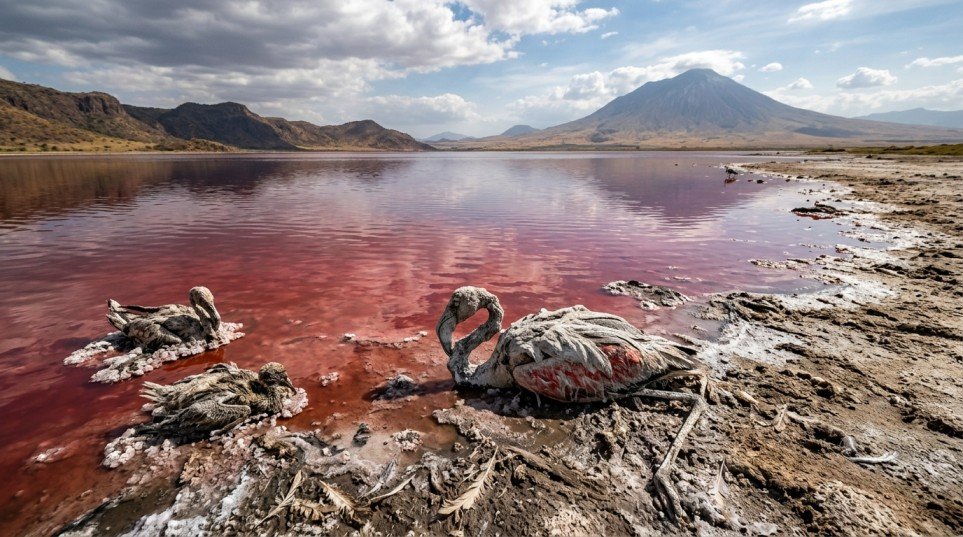
Imagine walking along the shore of a quiet, blood-red lake and finding a flamingo standing perfectly still. You get closer, and you realise it is not alive at all. It looks like a statue carved from chalk. This is not a scene from a fantasy film. It is real, and it happens at Lake Natron […]
Imagine walking along the shore of a quiet, blood-red lake and finding a flamingo standing perfectly still. You get closer, and you realise it is not alive at all. It looks like a statue carved from chalk. This is not a scene from a fantasy film. It is real, and it happens at Lake Natron in Tanzania, often called the lake that turns animals into stone.
But does this lake really turn animals into stone? The short answer is no, not literally. The animals are not made of stone. They are naturally mummified by the lake’s harsh chemicals. The real story is even stranger than the myth, and in this article we explain exactly how it works.
Quick Facts About Lake Natron
| Location | Northern Tanzania, near the Kenya border |
| Lake type | Soda lake (salt and alkaline), no outlet |
| Water pH | Around 10.5, can rise up to 12 in the dry season |
| Water temperature | Can reach 60°C (140°F) |
| Depth | Very shallow, often less than 3 metres |
| Nearby volcano | Ol Doinyo Lengai (“Mountain of God”) |
| Famous for | “Stone” animals, red colour, lesser flamingos |
Does Lake Natron Really Turn Animals to Stone?
No. This is the most common misunderstanding about the lake. Animals do not touch the water and instantly freeze into rock. That idea spread across the internet after 2013, when wildlife photographer Nick Brandt published haunting photos of birds and bats that looked like stone statues in his book Across the Ravaged Land.
Here is what really happened. Brandt found animals that had already died near the lake. Their bodies had been soaked in the lake’s mineral-rich water and then dried out. He picked up these preserved bodies and placed them in life-like poses on branches and rocks to photograph them. So the “statues” were real animals, but the poses were set up by the photographer.
In simple words: the lake does not kill animals by turning them into stone. It preserves animals after they die, making them look like stone.
How Does the Lake Turn Animals Into “Stone”? (Step by Step)
The secret is a natural mineral called natron, which gives the lake its name. Natron is mainly a mix of sodium carbonate (soda ash) and other salts. Here is how the “stone” effect happens:
- An animal dies in or near the water. Usually it is a bird or small animal that was weak, lost, or confused.
- The body soaks in salty, alkaline water. The sodium carbonate starts pulling water and fat out of the body.
- The body dries out completely. This drying process is called desiccation. Bacteria cannot rot the body because the conditions are too harsh.
- A white mineral crust forms. As water evaporates, a chalky layer of salt and minerals builds up on feathers and skin.
- The result looks like a statue. Hard, white-grey and frozen in shape, the body looks as if it has been carved from stone.
Interestingly, ancient Egyptians used this very same mineral, natron, to dry and preserve mummies thousands of years ago. So you could say Lake Natron is a natural mummy factory.
Why Do Animals Die at Lake Natron?
Nobody knows the exact cause of every death, but scientists and photographers suggest a few strong reasons:
- Mirror-like surface: The lake’s water is very still and reflective. Birds flying over it may get confused, much like birds crashing into glass windows.
- Burning water: The water is so alkaline that it can burn the skin and eyes of animals that are not adapted to it.
- Extreme heat: The water can reach 60°C, and air temperatures around the lake often go above 40°C.
- No fresh drinking water: Thirsty animals that drink the lake water can be badly harmed.
Why Is Lake Natron Red?
From above, Lake Natron can look red, orange or even pink. This colour does not come from blood. It comes from tiny salt-loving microorganisms, mainly cyanobacteria and haloarchaea. These microbes have red pigments in their cells.
During the dry season, the lake shrinks, the water becomes saltier and these microbes multiply. The more they grow, the redder the lake becomes. That is why the lake looks most dramatic in the hottest, driest months.
What Makes the Water So Dangerous?
Lake Natron sits in the East African Rift Valley, an area full of volcanic activity. The nearby volcano Ol Doinyo Lengai produces a rare type of lava that is rich in sodium carbonate. Over time, rain washes these minerals into the lake, and hot springs push even more up from below.
The lake has no river flowing out of it. Water can only leave through evaporation. When the water evaporates, the minerals stay behind and keep getting stronger. This is why the pH can climb from around 10.5 up to 12, which is close to household bleach.
What Animals Live in Lake Natron?
Even though the lake is deadly for most creatures, some species have adapted to survive there:
- Lesser flamingos: The lake’s biggest residents (more on them below).
- Alkaline tilapia: A few special fish species live in the warm, less salty spots near hot springs.
- Cyanobacteria and algae: These microbes form the base of the food chain.
Around the lake, in the surrounding plains, you can also find zebras, wildebeest, gazelles, gerenuks, oryx, golden jackals, ostriches and many bird species such as pelicans and herons.
Why Do Flamingos Love This Deadly Lake?
This is the biggest surprise of all. Lake Natron is the most important breeding ground in the world for lesser flamingos. Most of East Africa’s roughly 2.5 million lesser flamingos are born here.
So why would birds choose such a deadly place? There are three clear reasons:
- Tough legs: Flamingos have thick, scaly skin on their legs that protects them from burns.
- Plenty of food: They eat the same red cyanobacteria that colour the lake. This diet is also what makes flamingos pink.
- Safety from predators: Flamingos build mud nests on small salt islands. Predators like hyenas and jackals cannot cross the burning water to reach their eggs.
In other words, the same water that kills other animals protects flamingo chicks.
Can Humans Swim in Lake Natron?
No, you should never swim in Lake Natron. A short touch may not kill a person, but the water can cause serious skin and eye burns. Add the very high water temperature and the scorching heat around the shore, and swimming becomes truly dangerous.
However, visiting the lake with a local guide is safe. Tourists come to see flamingos, walk on the salt flats, hike to the Engaresero waterfall and even climb Ol Doinyo Lengai at night to watch the sunrise from the top.
Other Strange Places Like This
Lake Natron is not the only place on Earth with rules that seem impossible. If you enjoy unusual facts, you will also like these stories:
- Why can’t you die in Longyearbyen, Norway?
- Bir Tawil: the only land on Earth that no country wants
- Pheasant Island: the island that changes country every 6 months
Frequently Asked Questions
Is the lake that turns animals into stone real?
Yes, the lake is real. It is Lake Natron in Tanzania. But animals do not literally turn into stone. Dead animals get preserved by the lake’s minerals and look like stone statues.
What is the pH of Lake Natron?
The pH is usually around 10.5, and it can reach up to 12 when water levels drop in the dry season. That is similar to ammonia or bleach.
How hot is Lake Natron?
The water temperature can reach up to 60°C (140°F) in the hottest months because the lake is very shallow.
Why are the animals in the photos posed?
Photographer Nick Brandt found the preserved animals on the shore and placed them in natural poses to create his artistic photos. The animals did not die in those positions.
Can you visit Lake Natron?
Yes. Lake Natron is around 5 hours by road from Arusha. The cooler months from June to August are a good time to visit, and flamingo breeding is usually most active from around August to February.
Final Answer
Lake Natron is not a magic lake that turns animals into rock. It is a hot, extremely salty and alkaline lake that naturally mummifies animals that die in it, giving them a stone-like look. The same harsh water that makes it one of the deadliest lakes on Earth also makes it the safest home for millions of flamingos. That mix of death and life is what makes Lake Natron one of the most fascinating places on our planet.