
Blood Falls in Antarctica is red because the salty water flowing out of Taylor Glacier is packed with dissolved iron. The water comes out clear, but as soon as it touches oxygen in the air, the iron rusts and stains the ice blood-red. It is not blood, and it is not algae.
In this article
- What Is Blood Falls and Where Is It?
- Why Is Blood Falls Red?
- What Did the 2023 Nanosphere Study Find?
- Is Blood Falls Real Blood?
- Why Doesn’t Blood Falls Freeze?
- Where Does the Water Come From?
- When and Why Does Blood Falls Flow?
- Is There Life Inside Blood Falls?
- Why Do Scientists Compare Blood Falls to Mars?
- Can You Visit Blood Falls?
- Blood Falls Discovery Timeline
- Blood Falls Quick Facts
- FAQs
- Explore More Strange Places Now
Few places on Earth look as shocking as Blood Falls. In the middle of a white, frozen desert, a glacier appears to bleed onto a frozen lake. For more than a century, people asked the same question: why is Blood Falls red? Today, scientists have the answer, and it is a story about rust, ancient seawater, microbes that breathe iron, and clues about life on other planets.
In this guide, we explain why Blood Falls is red in simple words, why the water never freezes, where it comes from, and what the newest 2026 research has revealed.
What Is Blood Falls and Where Is It?
Blood Falls is a reddish outflow of salty water that seeps from the front edge (the “tongue”) of Taylor Glacier onto the ice-covered surface of West Lake Bonney. It sits in Taylor Valley, part of the McMurdo Dry Valleys in Victoria Land, East Antarctica.
- Coordinates: about 77.72° S, 162.27° E
- Height: the brine runs down roughly 60 to 80 feet (18 to 24 metres), about the height of a five-story building
- Surroundings: the McMurdo Dry Valleys are one of the driest and coldest deserts on Earth
- Visibility: the red stain is so large it can be seen in satellite images
Despite its name, Blood Falls is not a classic waterfall. It does not flow all the time. Instead, it releases brine in pulses, and the red-orange deposits build up on the ice as a stained fan.
Why Is Blood Falls Red?
The red color comes from iron. The water that feeds Blood Falls is a brine, which simply means very salty water. This brine has been trapped under the glacier with almost no oxygen, so its iron stays dissolved in a form called ferrous iron (Fe²⁺), which is colorless.
Here is what happens, step by step:
- Pressure under the glacier pushes the brine up through cracks in the ice.
- The brine reaches the surface looking clear.
- Oxygen in the air reacts with the dissolved iron within seconds to minutes.
- The iron oxidizes, which is the same chemical process that makes an old nail rust.
- The rust-colored particles stain the ice and lake shore blood-red.
Blood Falls is basically a glacier rusting in real time.
Simple explanation of oxidation: oxidation is when a substance reacts with oxygen. When iron oxidizes, it changes into reddish-brown compounds we call rust. That is why bikes left in the rain turn orange, and it is why Blood Falls turns red.
What Did the 2023 Nanosphere Study Find?
For years, scientists searched the red deposits for iron minerals. They kept coming up short. A team including materials scientist Ken Livi of Johns Hopkins University finally found out why, in research published in Frontiers in Astronomy and Space Sciences (paper published 2022, widely reported in 2023).
Using powerful transmission electron microscopes, the team found tiny iron-rich nanospheres in the Blood Falls samples:
- Each one is about 1/100th the size of a human red blood cell.
- Besides iron, they contain silicon, calcium, aluminum and sodium.
- They are not crystalline, so technically they are not minerals. That is why older mineral tests missed them.
These nanospheres oxidize and give Blood Falls its deep red shade, with the other elements inside them also affecting the exact color. You can read the university’s summary on the Johns Hopkins Hub.
Key insight: The full answer to “why is Blood Falls red” has two layers. Iron in the brine oxidizes in air (the basic answer), and that iron takes the form of tiny, non-crystalline nanospheres (the detailed answer that took over 100 years to find).
Is Blood Falls Real Blood?
No. Blood Falls contains no blood at all. The name comes purely from its color.
The feature was first recorded in 1911 by Australian geologist Thomas Griffith Taylor during Robert Falcon Scott’s Terra Nova expedition. The glacier and valley were later named after him. Early explorers guessed that the red stain came from red algae, the same kind of pigmented algae that can turn snow pink.
That theory was wrong. Chemical analysis later showed that iron salts, not algae, were behind the color. The algae myth still appears online today, which is one reason so many people keep searching whether Blood Falls is real blood.
Why Doesn’t Blood Falls Freeze?
This is one of the most surprising parts of the story. The ice of Taylor Glacier near Blood Falls averages about 0°F (−17°C). Normal water would freeze solid. So how does the brine keep flowing?
A 2017 study in the Journal of Glaciology, led by Jessica Badgeley with glaciologist Erin Pettit of the University of Alaska Fairbanks, explained it with two effects working together:
1. Salt lowers the freezing point
Salty water freezes at a lower temperature than fresh water. The Blood Falls brine is roughly 8% salt, more than twice as salty as typical seawater, and samples of it measured about −7°C (19°F) while still liquid.
2. Freezing water releases heat
It sounds backwards, but when water freezes it gives off heat (scientists call this latent heat). As some of the brine freezes inside the glacier, that heat warms the ice around it, which helps the rest of the brine stay liquid and keep moving.
The team used radio-echo sounding, a radar method where one antenna sends pulses into the ice and another records the echoes. Because salty brine shows up very differently from fresh glacier ice, they could trace the brine’s path, which runs about 300 feet from beneath the glacier to the falls.
“Taylor Glacier is now the coldest known glacier to have persistently flowing water.” – Erin Pettit
You can read the original announcement from the University of Alaska Fairbanks.
Where Does the Water Come From?
The brine comes from an ancient body of seawater trapped under Taylor Glacier long ago.
- Millions of years ago, when Antarctica was warmer and sea levels were higher, ocean water likely flooded parts of the Dry Valleys.
- When the sea retreated, some of that water got trapped as Taylor Glacier advanced over it.
- A 2009 study in Science led by geomicrobiologist Jill Mikucki estimated the pool was sealed off at least 1.5 to 2 million years ago, under roughly 400 metres (1,300 feet) of ice, about 4 km upstream of the falls.
- More recent work published in 2026 points to the water getting trapped around 2.5 million years ago.
Where does the iron come from? Seawater has very little iron. Scientists believe the iron was scraped out of the bedrock as the glacier ground over it, and microbes in the brine helped release it into the water.
The hidden water network under the Dry Valleys
In a 2015 study in Nature Communications, Mikucki’s team flew a helicopter-mounted electromagnetic sensor called SkyTEM over Taylor Valley. It works a bit like a giant flying metal detector, and salty water lit up clearly on its readings. They found:
- Brine under Taylor Valley stretching from the coast to at least 12 km (7.5 miles) inland
- Groundwater roughly twice as salty as seawater
- Brine under Taylor Glacier as far back as the sensor could see, about 5 km (3 miles) up the glacier
“Blood Falls is not just an anomaly, it’s a portal to this subglacial world.” – Jill Mikucki
In other words, Blood Falls is the only visible surface leak of a much larger, hidden salty water system.
When and Why Does Blood Falls Flow?
Blood Falls is episodic, meaning it flows in bursts rather than all the time.
- A review of old photos, journals and field reports found that of 30 summer seasons between 1903 and 1994 with usable records, 21 seasons (70%) showed signs of brine flow.
- A 2022 study (Carr, Carmichael and Pettit) captured Blood Falls releasing brine in winter, in subfreezing air. That showed the flow does not depend on summer surface melting.
- A 2026 study in Antarctic Science, led by Peter Doran of Louisiana State University, matched GPS, camera and lake temperature data from a discharge event in September 2018.
During that 2018 event, which lasted about a month:
- The glacier surface dropped by about 15 mm (0.6 inches).
- The glacier’s forward movement slowed by about 10%.
- Lake water near the outflow cooled by up to 1.5°C (2.7°F).
The takeaway: the weight and movement of the glacier build pressure on the brine beneath it. When cracks line up, the brine escapes in pulses, pressure drops, and the glacier itself responds.
Is There Life Inside Blood Falls?
Yes, and this is what makes Blood Falls famous among biologists.
The 2009 discovery: microbes that breathe iron
Mikucki’s 2009 team found at least 17 types of microbes in brine that had almost no oxygen and no sunlight. Instead of breathing oxygen, these microbes use sulfate and iron to get energy from tiny amounts of trapped organic matter. That kind of metabolism had never been seen in nature before. Many of these microbes are related to species found in the ocean, which fits the ancient seawater theory.
In late 2014, Mikucki’s team used a melting probe called IceMole to drill into the glacier and collect brine directly from the channel that feeds the falls.
The 2026 discovery: a “marine oasis” in the desert
In a study published on 3 August 2026 in Nature Geoscience, a team including marine biologist Andrew Allen of the Scripps Institution of Oceanography analyzed 167 samples of sediment, water and air around Blood Falls and the wider Dry Valleys.
- Blood Falls samples were rich in ocean-linked microbes with cell nuclei, including diatoms, dinoflagellates, haptophytes and ciliates.
- More than 60% of the diatoms in the red mud and sediment had ancestral ties to ocean life.
- Nearby sites mostly held land and freshwater microbes, so Blood Falls really is different.
- The site is more than 20 miles from the ocean.
Allen described the finding as a thriving “marine oasis in a polar desert”. The researchers think ancient flooding, not wind, best explains how these marine microbes got there. You can read more in Smithsonian Magazine’s report.
Why Do Scientists Compare Blood Falls to Mars?
Blood Falls is one of the best places on Earth to practise looking for life on other worlds.
- Mars: Mars is also red because of oxidized iron, and scientists think salty groundwater may have existed there as the planet dried out. The Dry Valleys are often called one of Earth’s closest matches to Martian conditions.
- Rover lesson: the nanosphere study showed that the kind of tools carried by Mars rovers could miss non-crystalline iron particles like those at Blood Falls. That matters for how future missions search for signs of life.
- Icy moons: if microbes can survive millions of years in dark, salty, oxygen-free water under ice, then the hidden oceans of moons like Europa and Enceladus look more promising too. Probes like IceMole are partly designed with such worlds in mind.
Can You Visit Blood Falls?
It is possible, but very few people ever see it.
- The McMurdo Dry Valleys are reached mainly by helicopter from McMurdo Station (USA), Scott Base (New Zealand), or from expedition cruise ships in the Ross Sea.
- Helicopter flights from McMurdo Station to the Dry Valleys take roughly 45 minutes.
- The area is protected under the McMurdo Dry Valleys Antarctic Specially Managed Area, with strict rules on landing sites, cleaning gear and removing all waste.
- Most visitors are scientists, support staff and a small number of travellers on specialist Ross Sea expeditions, often seeing it from the air.
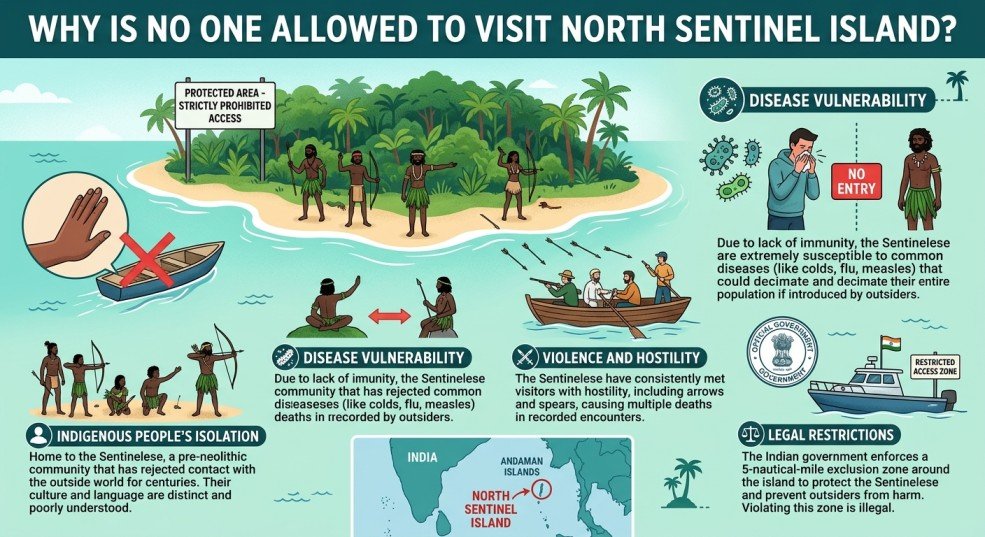
For most of us, the best way to see Blood Falls is through satellite maps and research photos. If remote, restricted places interest you, read our guide on why no one is allowed to visit North Sentinel Island.
Blood Falls Discovery Timeline
| Year | What happened |
|---|---|
| 1911 | Griffith Taylor records the red stain; red algae is the first guess |
| 1960s | Iron salts identified as the cause of the color |
| 2009 | Mikucki’s team finds iron-breathing microbes in ancient, oxygen-free brine |
| 2014 | IceMole probe samples brine directly inside the glacier |
| 2015 | SkyTEM survey reveals a huge salty groundwater network |
| 2017 | Radar maps the brine’s path and explains why it doesn’t freeze |
| 2022 | Winter brine flow recorded; nanosphere paper published |
| 2023 | Johns Hopkins explains iron nanospheres behind the red color |
| 2026 | Studies link outflow to glacier movement and find ocean-linked microbes |
Blood Falls Quick Facts
| Location | Taylor Glacier, Taylor Valley, McMurdo Dry Valleys, East Antarctica |
| Flows into | West Lake Bonney |
| Cause of red color | Iron in the brine oxidizing in air |
| Brine temperature | About −7°C (19°F), still liquid |
| Salt content | About 8%, more than twice seawater |
| Age of trapped water | Roughly 1.5 to 2.5 million years |
| First recorded | 1911, by Thomas Griffith Taylor |
| Microbe types (2009) | At least 17 |
Quick win this week: see the Blood Falls effect at home
Put a small piece of plain steel wool in a glass jar with salty water and leave it open to the air. Within a day or two, the water turns orange-red as the iron rusts. It is a tiny version of what happens at Blood Falls. Do it with adult supervision and throw the water away afterwards.
FAQs
Why is Blood Falls red?
Blood Falls is red because its salty water contains dissolved iron. When the water reaches the air, the iron oxidizes (rusts) and stains the ice red.
Is Blood Falls real blood?
No. There is no blood in Blood Falls. The name comes only from its color.
Why doesn’t Blood Falls freeze?
The brine is very salty, which lowers its freezing point, and freezing water inside the glacier releases heat that keeps the rest of the brine liquid.
Where is Blood Falls located?
Blood Falls is at the end of Taylor Glacier in the McMurdo Dry Valleys of East Antarctica, where it flows onto West Lake Bonney.
Is the water at Blood Falls safe to drink?
It is not drinking water. It is more than twice as salty as seawater, has almost no oxygen, and lies in a protected area where sampling is strictly controlled.
How old is the water in Blood Falls?
Scientists estimate the water has been trapped under the glacier for roughly 1.5 to 2.5 million years.
Does Blood Falls flow all year?
No. It flows in pulses. Records show brine flow in about 70% of observed summer seasons, and it has also been seen flowing in winter.
Explore More Strange Places Now
Blood Falls proves that the strangest things on Earth usually have a clear scientific answer. Here is what to do next:
- Remember the short answer: iron-rich brine + oxygen = red rust.
- Look up Taylor Glacier on a satellite map and spot the red stain yourself.
- Try the steel wool rust test above to see oxidation in action.
- Read about another red, deadly lake: Lake Natron, the lake that turns animals into stone.
- Discover another frozen polar mystery: why you can’t die in Longyearbyen, Norway.
- See another natural feature that has burned for decades: the Gates of Hell crater.
The next time someone tells you a glacier in Antarctica bleeds, you will know the real reason why Blood Falls is red. Keep asking questions, because every strange fact has a story behind it.

1 comment